


Your shopping cart is empty!
Sweet pepper "Salana" F1
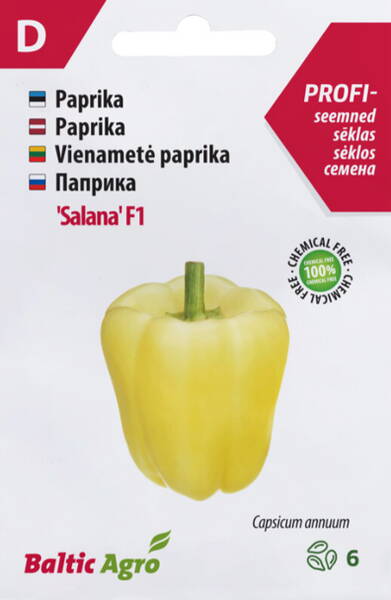
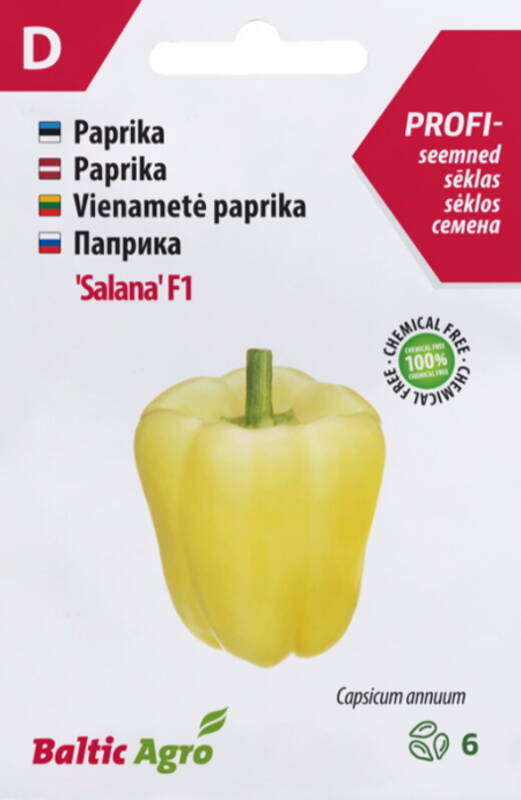
Sweet Pepper "Salana" F1.
An unusual hybrid variety with cream-white cube-shaped fruits. The bush is compact, with vigorous growth.
The variety is very productive and resistant to diseases. Fruits have dense flesh, tender and juicy, weighing 180-210 g.
An unusual hybrid variety with cream-white cube-shaped fruits. The bush is compact, with vigorous growth.
The variety is very productive and resistant to diseases. Fruits have dense flesh, tender and juicy, weighing 180-210 g.
Sowing pepper seeds.
Fill seed boxes or individual pots (pots are the best option, as peppers do not tolerate transplanting well) with a mixture of the following composition:
1) 7 parts decomposed peat, 2 parts manure humus, 1 part sod land, 1 part cow manure; add 8 g of ammonium nitrate, 80 g of superphosphate, 30 g of potassium salt per bucket of mixture; mix well;
2) 2 parts decomposed peat, 2 parts humus and 1 part small sawdust; add 1 tablespoon of wood ash and 1 tablespoon of superphosphate per bucket of mixture; mix well.
Seeds are sown at times depending on the place and conditions of seedling cultivation: if you grow peppers in shelters of various types, then it is necessary to sow seeds as early as February; if in open ground, then calculate so that the seedlings are 60-65 days old.
The mixture is poured into boxes in a layer of 6-8 cm, leveled, slightly compacted, grooves are made at a distance of 5 cm from each other. Seeds are sown to a depth of 1.0-1.5 cm every 2 cm, covered with earth. From above, the boxes are covered with glass or plastic film and placed in a warm place (22-25 °C) until germination, after which the cover is removed.
The box with seedlings is placed on a sunny windowsill for 6-7 days at a temperature of 15-17 °C. Then the temperature is gradually increased: during the day to 20-25 °C, and at night: 16-17 °C.
Water with settled water heated to 22-25 °C (approximately once a week). After about a month (seedlings will have 2 permanent leaves), seedlings grown in boxes are pricked out (transplanted).
* How to improve fruit setting of tomatoes, peppers, and eggplants?
For better natural pollination, gardeners have developed several techniques aimed mainly at maintaining the flower in good condition and ensuring that pollen hits the pistil stigma in time. Firstly, plants are gently shaken so that pollen spills onto the pistil stigma. This should be done daily, several times a day. Secondly, with insufficient air humidity, plants are sprayed with warm water from a sprayer with a fine spray. Thirdly, protected ground structures are regularly ventilated so that the temperature in them during flowering does not exceed 35°C. The inflow of fresh air causes a slight swaying of plants, which causes pollen to fall onto the pistil stigma. Fourthly, ensure that the soil does not dry out under any circumstances, as this will lead to the shedding of not only flowers but also buds. Excessive soil moisture will entail increased air humidity, which will negatively affect fruit setting.
If during flowering there are signs of excess nitrogen (dark green plants form new shoots and leaves with amazing speed) or flowers fall off without setting fruit, then you need to immediately feed with phosphorus-potassium fertilizers or ash extract. You can give foliar feeding, the effect of which will appear much faster; for this, use the same solutions as for application to the soil, but diluted 4-5 times.
In cloudy weather, at high temperatures and dry air - anthers may open, all pollen will spill out of them, but... pollination may not occur. In this case, artificial pollination can be carried out. To obtain a marketable crop, pollen can be collected from several varieties simultaneously, mixing it. First of all, you need to collect pollen from other plants: to do this, take a dry clean saucer and shake the flowers over it, place the saucer as close to the flowers as possible so that the pollen does not scatter in different directions (breathe away from the flower). Having collected the required amount of pollen, proceed to pollination. With a small soft brush or a piece of eraser attached to a sewing needle, carefully apply pollen to the pistil stigma of long-opened flowers.
Artificial pollination will be beneficial if the reasons why natural pollination did not occur are eliminated.
Did you know that... canned peppers are perfectly tasty and healthy. Peel sweet pepper fruits (7 kg), cut into slices 1 cm wide. Boil in marinade for 5-7 minutes, place in sterilized jars and roll up with lids.
Marinade per 7 kg of pepper: 2 cups of water, 1 cup of vegetable oil, 2/3 cup of sugar, 2 tablespoons of salt, garlic, bay leaf, black pepper.
By the way: place peppers of different colours in a jar - and you will greatly decorate your table and please your family, especially children.